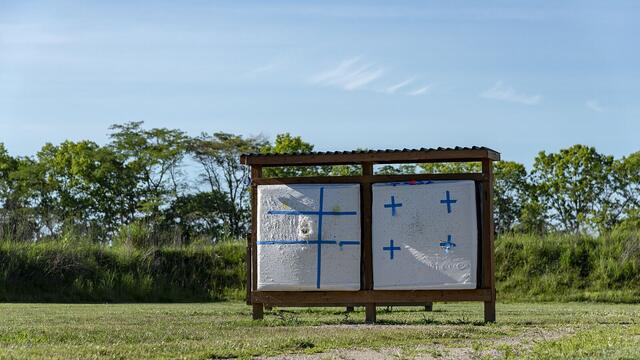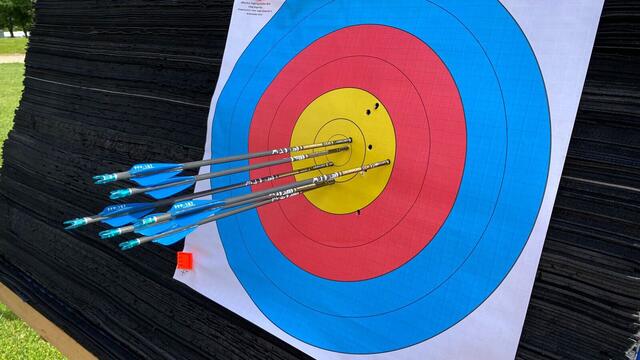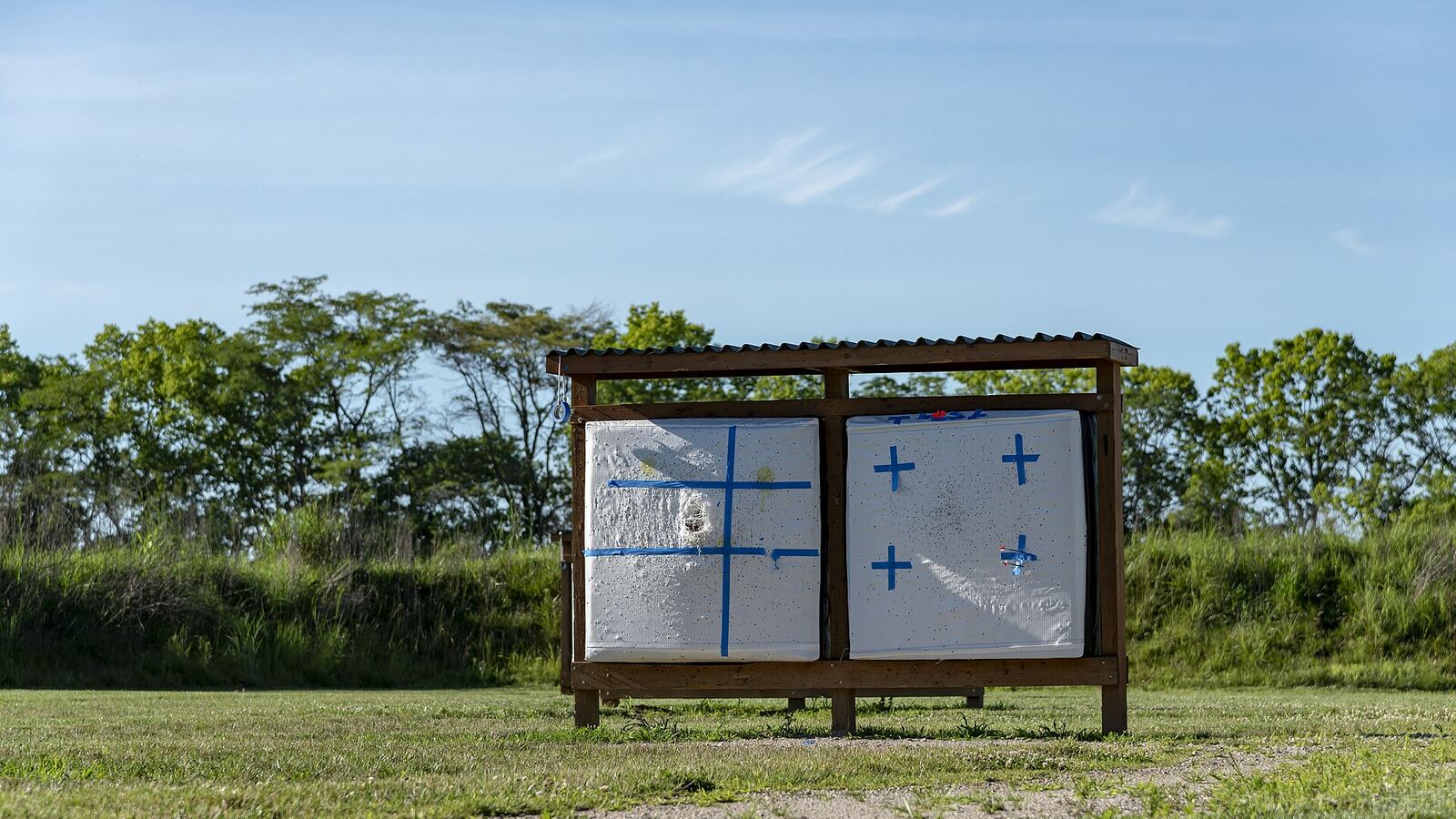
An archery backstop net is a heavy curtain of netting hung behind and around your target to catch arrows that miss the boss or pass through it. Used well, it can reduce the chance of a stray arrow skidding into a fence, a shed wall or the grass where it gets lost. Used badly, it gives people a false sense of security. This archery backstop net safety guide explains what netting is for, how to hang it, and why it should always be one layer in a range that is already safe without it.
Before anything else: check the law where you live. Rules on shooting archery on private land differ a lot between countries, regions and even towns. Some places allow backyard archery with conditions, some don't allow it at all, and many require a certain distance from roads, paths and neighbours. Your local council, police non-emergency line or a nearby archery club are good places to ask. If unsure, use a club range.
What an archery backstop net actually does
Backstop netting is designed to slow and drop arrows rather than bounce them back. A loose, hanging net absorbs energy as it moves, which is why it is usually hung with slack instead of being pulled tight like a tennis net.
It helps with:
- Catching arrows that miss the target low, high or to the side
- Reducing damage to arrows, fletchings and whatever is behind the target
- Making arrows easier to find instead of burying them in grass
- Adding a visual boundary that tells everyone where the shooting zone ends
It does not:
- Make a short or crowded space safe to shoot in
- Replace a proper safety zone behind and beside the target
- Guarantee that every arrow will be stopped, especially from heavier draw weights or at close range
- Protect anyone standing behind it
Treat it as a supplement. If your range would be unsafe with the net removed, it is unsafe with the net in place too.
Choosing netting for an arrow backstop
Netting sold for archery is generally heavier than ball-stop netting. When you look at listings, compare these points rather than relying on a product title:
- Stated use. Look for netting described specifically for archery or arrow stopping. Netting meant for golf balls or footballs is not designed with arrows in mind.
- Material and construction. Check what the net is made of, whether it is knotted or knotless, and whether it is a single layer or multiple layers.
- Draw weight guidance. Some sellers give a maximum draw weight or bow type. If a listing gives none, ask the seller before buying, and be cautious.
- Size. Measure your space first. The net should extend well beyond the edges of your target on all sides.
- Hanging hardware. Check whether rings, cords or a frame are included, or whether you need to supply your own.
When buying on AliExpress or anywhere else, read the listing dimensions and materials carefully, look at seller ratings and recent buyer photos, and check the return policy. Don't assume a net is suitable for your bow just because it says "archery" in the title.
Where to hang the backstop net
The usual layout is a net hung a short distance behind the target, so arrows that pass the boss meet it while it can still swing. Many archers leave a gap between target and net rather than pinning the net against the back of the boss.
Practical placement tips:
- Hang it with slack. A net that can billow back absorbs more energy than one stretched drum-tight.
- Let it reach the ground, ideally with some extra length lying flat or turned forward so low arrows don't slide underneath.
- Go wide and high. Misses are rarely dead centre. Extend the net to the sides and above the target, especially for beginners.
- Keep it off hard surfaces. Don't hang it flat against brick, concrete or metal. If an arrow gets through, it should meet open, safe ground, not a wall that can deflect it.
- Use a sturdy support. A frame or posts that won't topple when the net is hit or caught by wind.
For a full layout including shooting line and overshoot zone, see our guide to setting up a safer backyard archery range.
The range around the net matters more
A backstop net is the last line, not the first. The basics of a safe archery space are the same with or without one:
- A clear zone behind the target that nobody can walk into while you are shooting. Fences, hedges and gates can all have gaps, so think about who could appear unexpectedly.
- Clear zones to the sides, because arrows can veer.
- A defined shooting line that everyone stands behind.
- No shooting toward houses, roads, paths, gardens, livestock or play areas, even with a net.
- Shoot only when the range is clear, and use a simple call system so everyone knows when it's safe to collect arrows.
- Supervise children closely at all times, with an adult who understands archery safety.
Club coaches are the best source of safety guidance for your bow and setting, and many clubs run beginner courses that cover range rules. See our archery category and safety page for more.
Matching the target to the net
A good target stops most arrows on its own, and the net only deals with the misses. Pick a target that suits your bow and arrow type, check it regularly for worn spots where arrows pass through, and replace or rotate it when it starts to fail. Our article on archery target types explains the difference between bag, foam block, straw boss and 3D targets.
Inspecting and maintaining backstop netting
Netting wears, especially outdoors. Check it before each session:
- Look for holes, frayed strands and broken knots, particularly in the area directly behind the target.
- Check the support frame, ropes and fixings for loosening or corrosion.
- Remove any arrows tangled in the net carefully, working the point back through rather than yanking.
- Take the net down or cover it when it isn't in use if you can, since sunlight and weather can weaken many netting materials over time.
If you find damage behind the target, stop shooting until it's repaired or replaced.
A quick pre-shoot checklist
- Local rules checked and followed
- Range clear behind, beside and in front of the target
- Net hanging with slack, reaching the ground, extending past the target on all sides
- Target in good condition
- Everyone behind the shooting line, children supervised
- Agreed calls for shooting and collecting
Frequently asked questions
Can I use a golf or football net as an archery backstop?
It isn't a good idea. Ball-stop nets are designed for blunt objects, not pointed arrows, and arrows may pass straight through or damage them. Look for netting described for archery use and check its stated limits with the seller.
Does a backstop net mean I can shoot in a small backyard?
No. A net can help catch misses, but it does not make a short or busy space safe. You still need a clear zone behind and to the sides of the target and you must follow local laws. If your space doesn't allow that, a club range is the better option.
How far behind the target should the net hang?
Many archers leave a gap so the net can swing freely when hit, rather than pressing it against the target. The right distance depends on your net, frame and space, so follow the seller's guidance and ask a local club for advice.
How do I know when to replace backstop netting?
Replace or repair it when you see holes, fraying, brittle strands or weak spots, especially directly behind the target. Inspect it before every session, and be stricter with nets left outdoors.
Is backyard archery legal?
It depends entirely on where you live. Some areas allow it with conditions, others restrict or ban it. Check with your local authority or police and a nearby archery club before you shoot at home.
Ready to set up your practice space?
Browse archery backstop nets and compare sizes on AliExpress.
Some links on this page are affiliate links to AliExpress. If you buy through them we may earn a small commission at no extra cost to you. We don’t test or endorse individual listings, so always check the seller, sizes and return policy. Learn more.