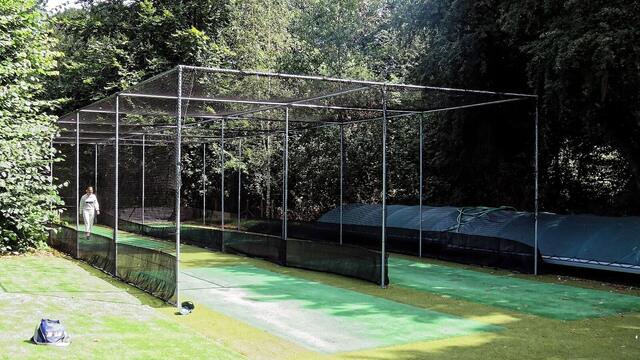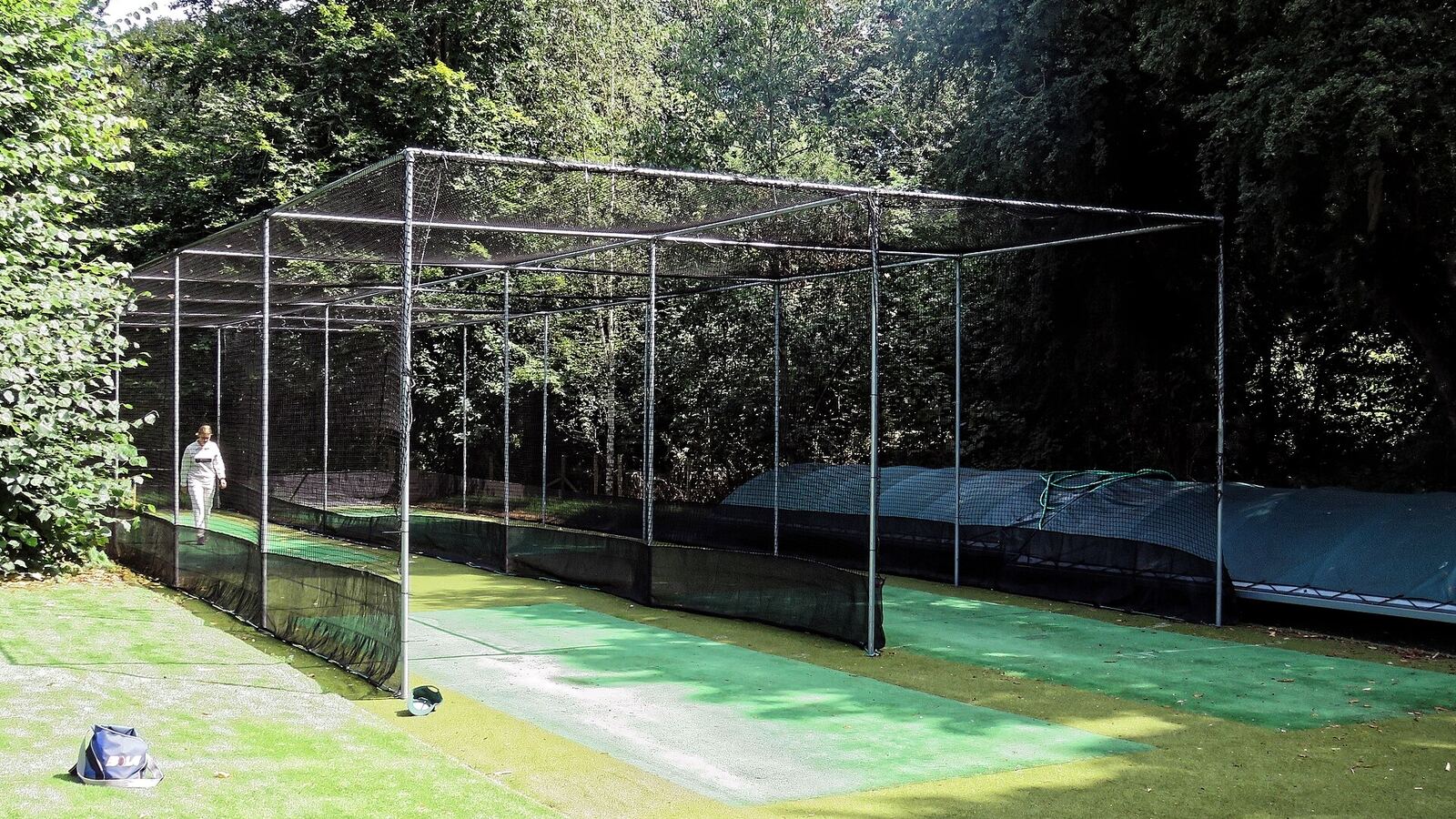
A full cricket net at a club is a long tunnel of netting around a 22-yard pitch. Most gardens can't fit that, and that's fine. Cricket practice nets at home are usually shorter, narrower setups built around a specific job: throwdowns, bowling into a target, catching or simply stopping the ball from flying into the neighbours' roses. This guide covers how to pick a size, set the net up safely and get real value from drills in the space you have.
What counts as a home cricket net?
Home cricket nets come in a few broad styles:
- Cage or tunnel nets: a frame with netting on the sides, back and top, usually shorter than a full pitch.
- Back-and-side nets: a wall of netting behind the batter with wings on each side, open at the top and front.
- Rebound or catching nets: angled frames that return the ball for catching and fielding work.
- Bowling target nets: a net or panel behind a set of stumps to catch deliveries while you work on accuracy.
Many families start with a back-and-side net or a short cage, because they suit garden-sized spaces and can be used for both batting and bowling drills.
How to choose the right size for your garden
A regulation pitch is 22 yards (about 20.12 m) between the stumps, but you don't need that length for useful practice at home. Short-pitch throwdowns, underarm feeds and bowling-machine work can all happen over a shorter distance.
Work it out in this order:
- Measure your usable space: length, width and height clearance, including any overhanging branches or washing lines.
- Decide what you'll do most: batting from throwdowns, bowling, or a mix.
- Allow run-up room if bowling is the priority. A bowler needs space behind the bowling crease, and that space is often what limits a garden.
- Leave clearance around the net: the netting will bulge when hit, so don't put it flat against a fence, window or shed.
- Check the frame height: a cage needs enough height for a batter to swing freely and for short balls to stay inside.
Junior pitch lengths vary by age group and association, so if you're setting up for a young cricketer, check what their club or league uses and don't worry about matching it exactly at home.
Choosing netting and frames
A cricket ball is hard and heavy, so the net has to cope with real impacts. When comparing options, look at:
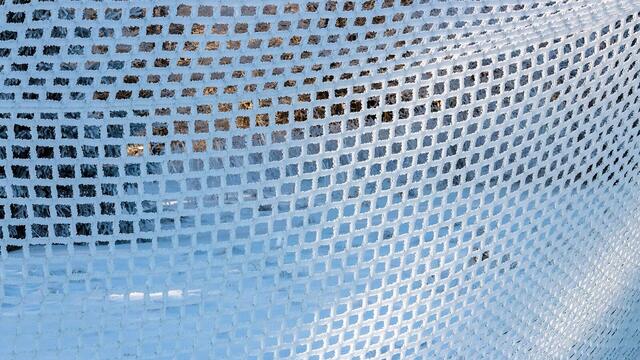
- Mesh size: it must be small enough that a cricket ball can't pass through. Check the stated mesh size against the ball you use.
- Netting material and thickness: listings should state what the net is made of and its thickness.
- Frame material and joints: a frame that flexes or comes apart under wind or impact isn't much use.
- Ground anchoring: pegs, weights or sandbags. Lawns and patios need different solutions.
- Assembly and storage: can you take it down for winter or when the garden's needed for something else?
When buying on AliExpress, read the dimensions and materials carefully, check seller ratings and recent buyer reviews with photos, and confirm the return policy. Don't assume a net is suitable for hard cricket balls unless the listing says so; if in doubt, ask the seller.
Setting up a home cricket net safely
- Anchor it properly. A net catching the wind behaves like a sail. Peg or weight every leg.
- Point it sensibly. Face the batter so that any ball that escapes heads toward open space, not toward windows, roads or seating areas.
- Keep a clear zone. Nobody should stand to the side of the batter without netting between them, especially younger children.
- Wear protective gear. For hard-ball batting, use a helmet, pads and gloves, as at the club. A soft or tennis ball is a sensible alternative in tight spaces and for younger players.
- Inspect regularly. Check for holes near the stumps area, broken joints and loose pegs before each session.
For more on general net safety, see our safety page.
Home cricket net drills for batting
1. Throwdowns on a length
A partner throws (or uses a sidearm thrower if you have one) to a consistent length. The batter works on one shot at a time: forward defence, then front-foot drive, then back-foot play. Ten good balls on one shot beats a random mix.
2. Leave or play
The feeder mixes deliveries outside off stump with balls on the stumps. The batter's job is to leave well outside off and defend or play straight on the stumps. It builds judgement without needing much space.
3. Soft hands
Using a soft or tennis ball, the batter tries to defend so the ball drops close to the bat rather than rebounding into the net. It's a good drill for control.
4. Balance check
After every shot, the batter holds the finish for a count of two. Losing balance usually means the head has moved; this is easy to spot in a short net.
Home cricket net drills for bowling
A net behind the stumps lets you bowl repeatedly without chasing every ball. Mark a length zone on the pitch with tape, chalk or a cone and aim to land the ball there. For a full set of accuracy drills, read our guide to cricket bowling target drills for line and length.
- Start with a short run-up to focus on action and release.
- Count how many balls out of each over land in your target zone.
- Only lengthen the run-up when accuracy holds.
Fielding and catching
If you have a rebound net, use it for catching practice: throw into the net and react to the return. Vary the angle and height. Keep the ball type appropriate to the player, and use soft balls for close, fast reaction work with children.
Looking after your net
Sun, rain and frost can all wear netting and frames over time. Take the net down or cover it in long spells of bad weather if you can, dry it before storing, and replace worn sections near the batting end first, since that's where most impacts land. More guides live in our cricket category.
Frequently asked questions
What size cricket net do I need for a garden?
It depends on your space and what you'll practise. A full pitch is 22 yards, but most home nets are shorter. Measure your length, width and height clearance, decide whether bowling or batting matters most, and choose a net that fits with room to spare around it.
Can I use a hard cricket ball in a home net?
Only if the net and frame are designed for hard balls and the mesh is small enough to stop one. Check the listing details and use full protective gear. Soft or tennis balls are a safer choice in tight spaces and for children.
How do I stop my cricket net blowing over?
Peg every leg into soft ground, or use weights or sandbags on hard surfaces. Take the net down or lower it in strong winds.
Is a back-and-side net enough for bowling practice?
It can be, for accuracy work. A net behind the stumps catches deliveries so you can bowl repeatedly. You'll still need enough room for a run-up, which is often the limiting factor in a garden.
Ready to set up your practice space?
Browse cricket practice nets and compare sizes on AliExpress.
Some links on this page are affiliate links to AliExpress. If you buy through them we may earn a small commission at no extra cost to you. We don’t test or endorse individual listings, so always check the seller, sizes and return policy. Learn more.