Pickleball courts can be busy, and the best way to get better is plenty of focused practice. A portable net in the driveway, a quiet car park or a garden lets you work on the shots that matter most: dinks, drops, serves and volleys. This guide to portable pickleball net practice covers official dimensions, how to set up a practice court, what to look for in a portable net and drills you can run alone or with a partner.
Pickleball net and court dimensions
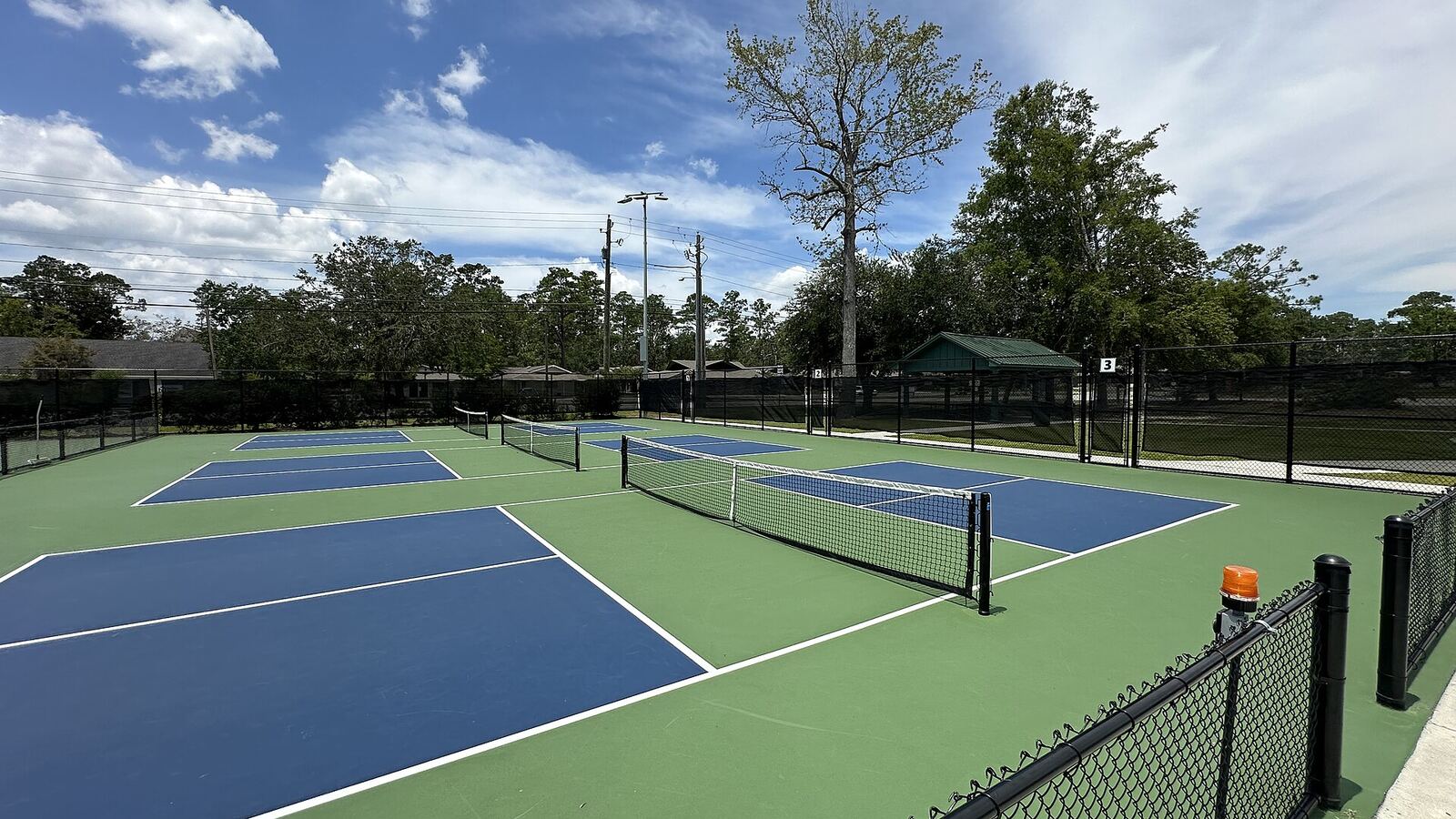
A standard pickleball net is 36 inches (91.4 cm) high at the sidelines and 34 inches (86.4 cm) high at the centre. The full court is 20 ft wide and 44 ft long (about 6.1 m x 13.4 m), and the non-volley zone, often called the kitchen, extends 7 ft (about 2.13 m) from the net on each side.
You don't need a full court in your driveway to practise well. Many of the most useful drills happen within a few steps of the net, and the kitchen line is the one marking worth getting right.
Choosing a portable pickleball net
Portable nets usually come with a metal frame, a net and a carry bag. When comparing listings, look at:
- Regulation sizing: whether the net is stated to match standard width and height, including the centre height.
- Frame stability: a wide, low base or feet that sit flat on your surface help stop wobbling.
- Setup and pack-down: how many parts, how they connect and whether there's a centre support to hold the middle at the right height.
- Weight and folded size: important if you'll carry it to a park or car boot.
- Net tension: a way to tighten the net so it doesn't sag.
On AliExpress, check the stated net width and height, frame material, what's included, seller ratings and recent buyer photos, and the return policy before ordering. After setup, measure the height yourself at the posts and centre.
Setting up a driveway practice court
- Pick a flat, smooth surface. Asphalt or concrete gives a consistent bounce. Sweep away gravel and debris first.
- Check the surroundings. Make sure balls flying past won't head into the road, a neighbour's car or windows. Choose a time and place where traffic isn't an issue, and never play where vehicles may move.
- Mark the kitchen line. Use chalk, removable tape or flat throw-down lines 7 ft from the net on each side. Add sidelines if you have the width.
- Measure the net. Check 36 in at the posts and 34 in at the centre.
- Mind the noise. Pickleball paddles and balls can be loud. Being considerate about hours helps keep neighbours friendly.
Pickleball drills for driveway practice
1. Cross-court dinks (partner)
Both players stand at the kitchen line and dink cross-court, aiming to land soft shots in the kitchen. Count consecutive dinks. Focus on a relaxed grip, short swing and lifting from the legs.
2. Straight-on dinks (partner)
Same as above, but straight ahead. Then alternate: one cross-court, one straight. This builds control and directional changes.
3. Third-shot drops (partner)
One player stands at the kitchen line and feeds deep. The other, from the baseline or as far back as your space allows, hits a soft drop that lands in the kitchen. Move forward after each good drop as you would in a game.
4. Volley exchanges (partner)
Both players stand a step or two back from the kitchen line (never volleying from inside it in a game) and volley back and forth at controlled pace. Keep the paddle up and in front.
5. Serve targets (solo)
Place cones or towels in the deep corners of the service area on the far side, if you have space for a full-length court. Serve to targets and count hits out of ten. If your driveway is short, focus on a consistent motion and contact point by serving into the net from a shorter distance.
6. Kitchen-line footwork (solo)
Without a ball, shuffle side to side along the kitchen line in a ready position, paddle up. Add a split-step whenever you stop. It's simple, but good footwork makes dinks and volleys easier.
7. Drop-feed control (solo)
Drop a ball and dink it over the net so it lands in the opposite kitchen. Collect, repeat. Try to land each ball closer to the net. It's slow, but builds touch.
8. Rebounder or wall reset (solo)
If you have a rebounder or a suitable wall, hit soft shots against it and reset the return with a block or soft volley. This trains quick hands and soft resets.
Session plan for a 30-minute driveway practice
- Warm-up (5 min): light movement, gentle dinks.
- Dinks (10 min): cross-court, then straight.
- Drops or volleys (10 min): choose one focus.
- Serves (5 min): targets or consistency.
Keep a simple note of streaks and target hits, and pick one thing to improve next time.
Safety and care
- Wear court shoes with good grip; driveways can be harder on the body than courts, so build up gradually.
- Never play near moving vehicles, and keep a clear area around the court.
- Use eye protection if you're playing fast exchanges at the net.
- Pack the net away when not in use to protect it from sun and rain, and check frame joints for wear.
For solo rebound ideas from other sports, see our guides to tennis rebounder net practice and volleyball training nets, or browse the racket and net sports category.
Frequently asked questions
How high is a pickleball net?
A standard pickleball net is 36 inches high at the sidelines and 34 inches high at the centre. Measure both after setting up a portable net.
Can I use a tennis net for pickleball?
A tennis net is taller, with a centre height of 36 inches compared with pickleball's 34. Some players lower a tennis net for pickleball using a centre strap, but a portable pickleball net is easier to set to the right height.
How much driveway space do I need for pickleball practice?
A full court is 20 by 44 feet, but many useful drills like dinking and volleying only need space around the kitchen line. Mark the 7-foot kitchen on each side and work with the length you have.
Is pickleball practice in the driveway too noisy?
Paddle and ball noise can carry. Being considerate about the time of day and talking with neighbours usually helps.
Ready to set up your practice space?
Browse tennis rebounder nets and compare sizes on AliExpress.
Some links on this page are affiliate links to AliExpress. If you buy through them we may earn a small commission at no extra cost to you. We don’t test or endorse individual listings, so always check the seller, sizes and return policy. Learn more.